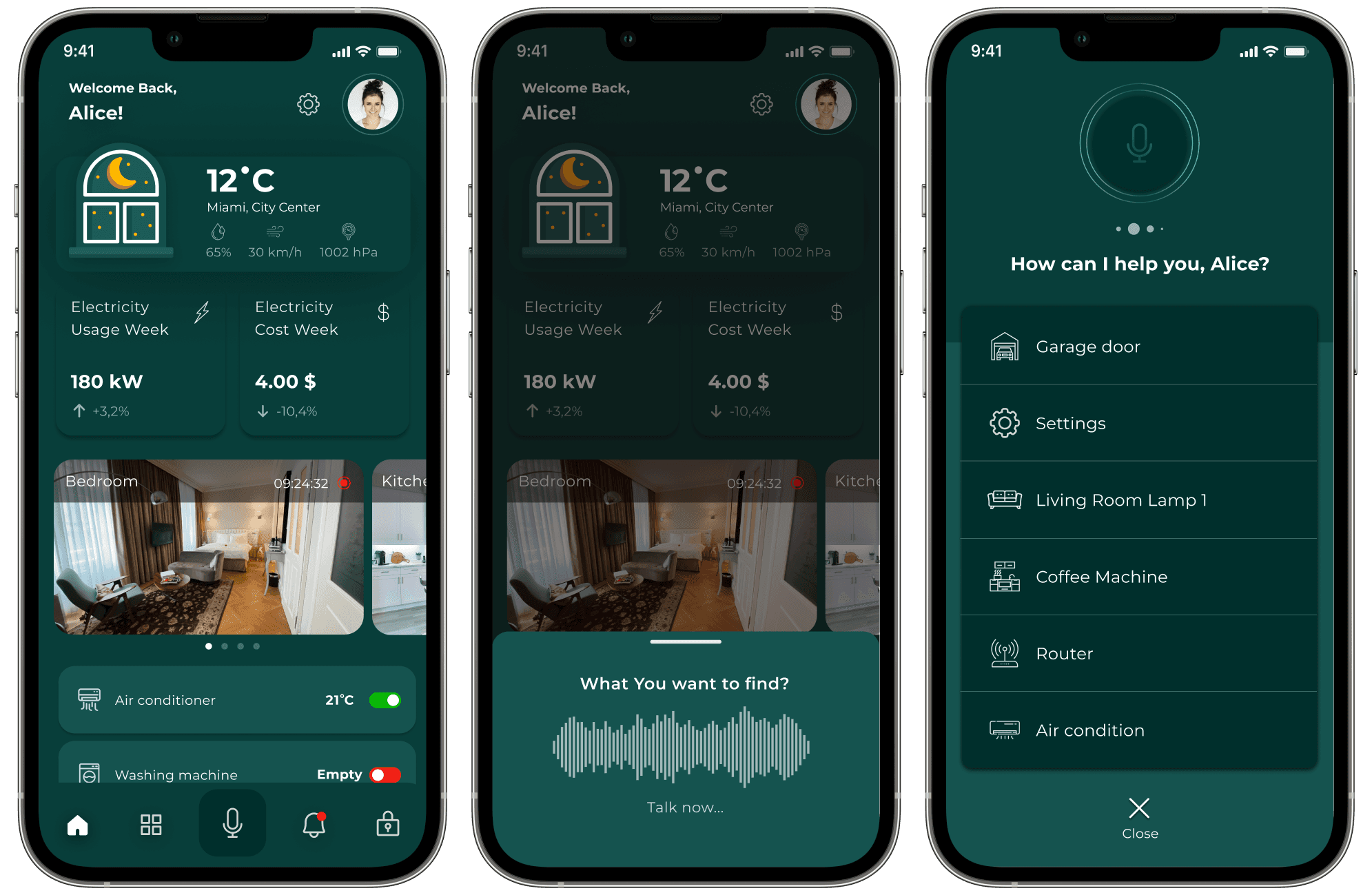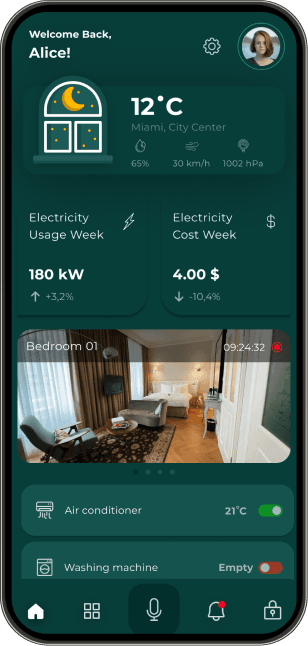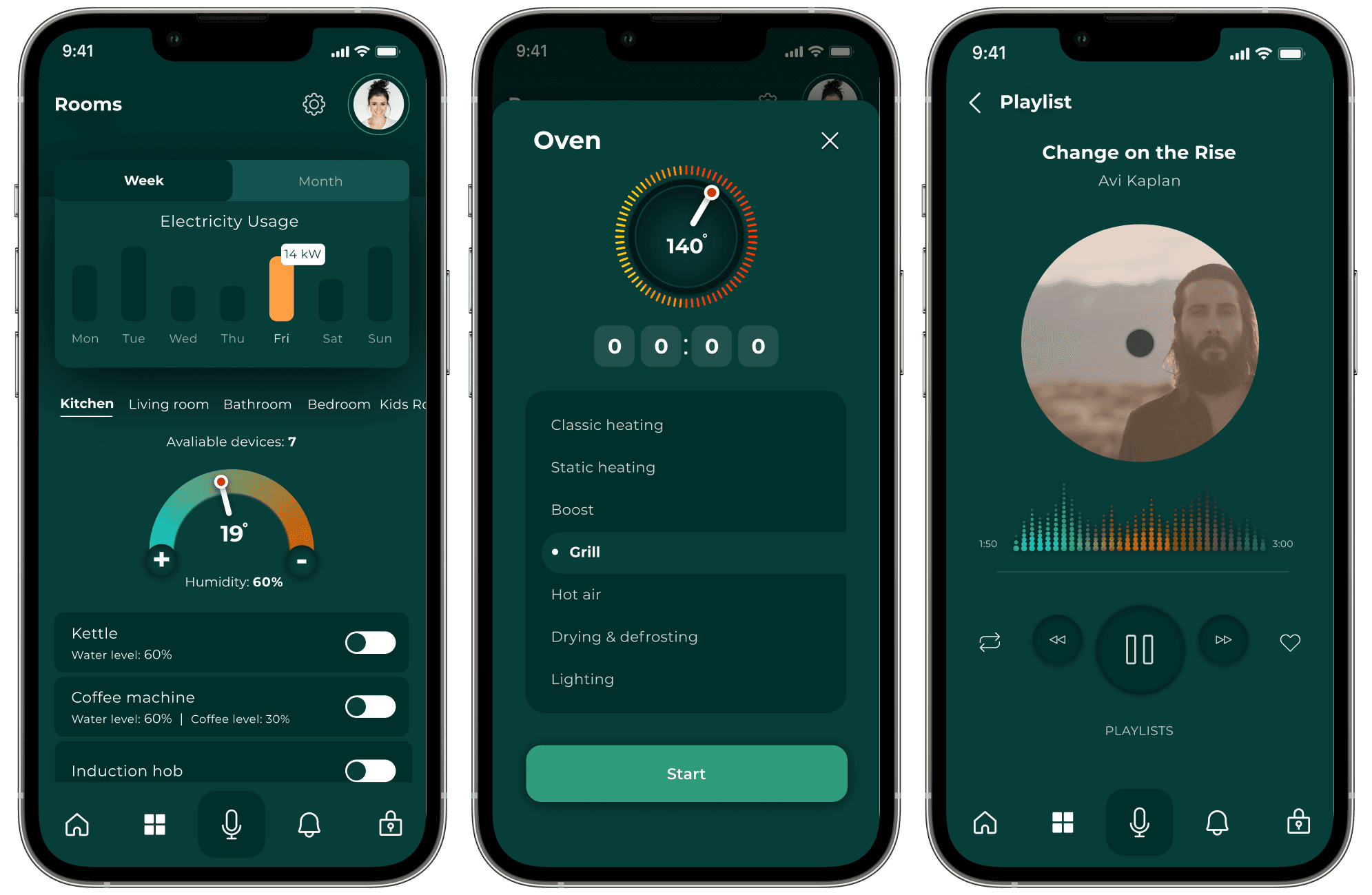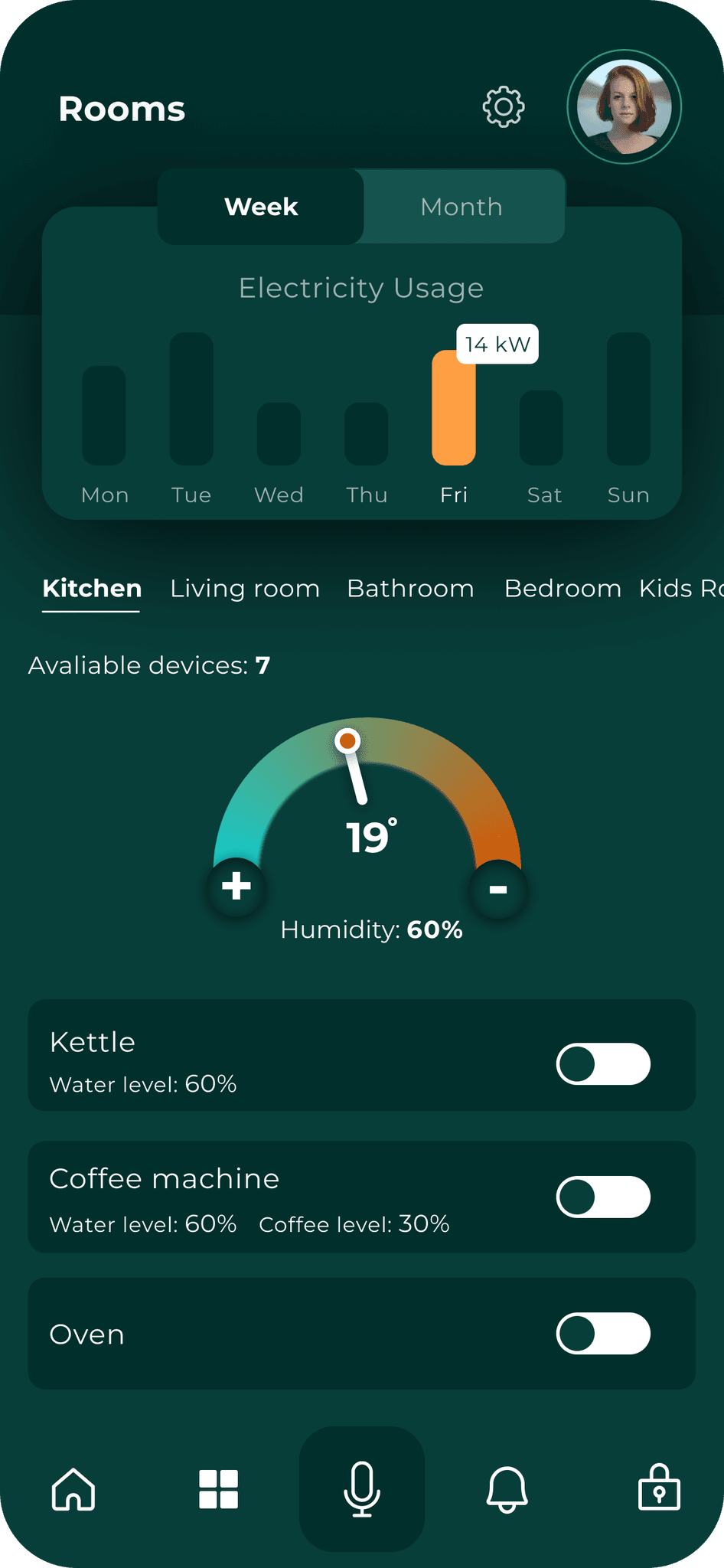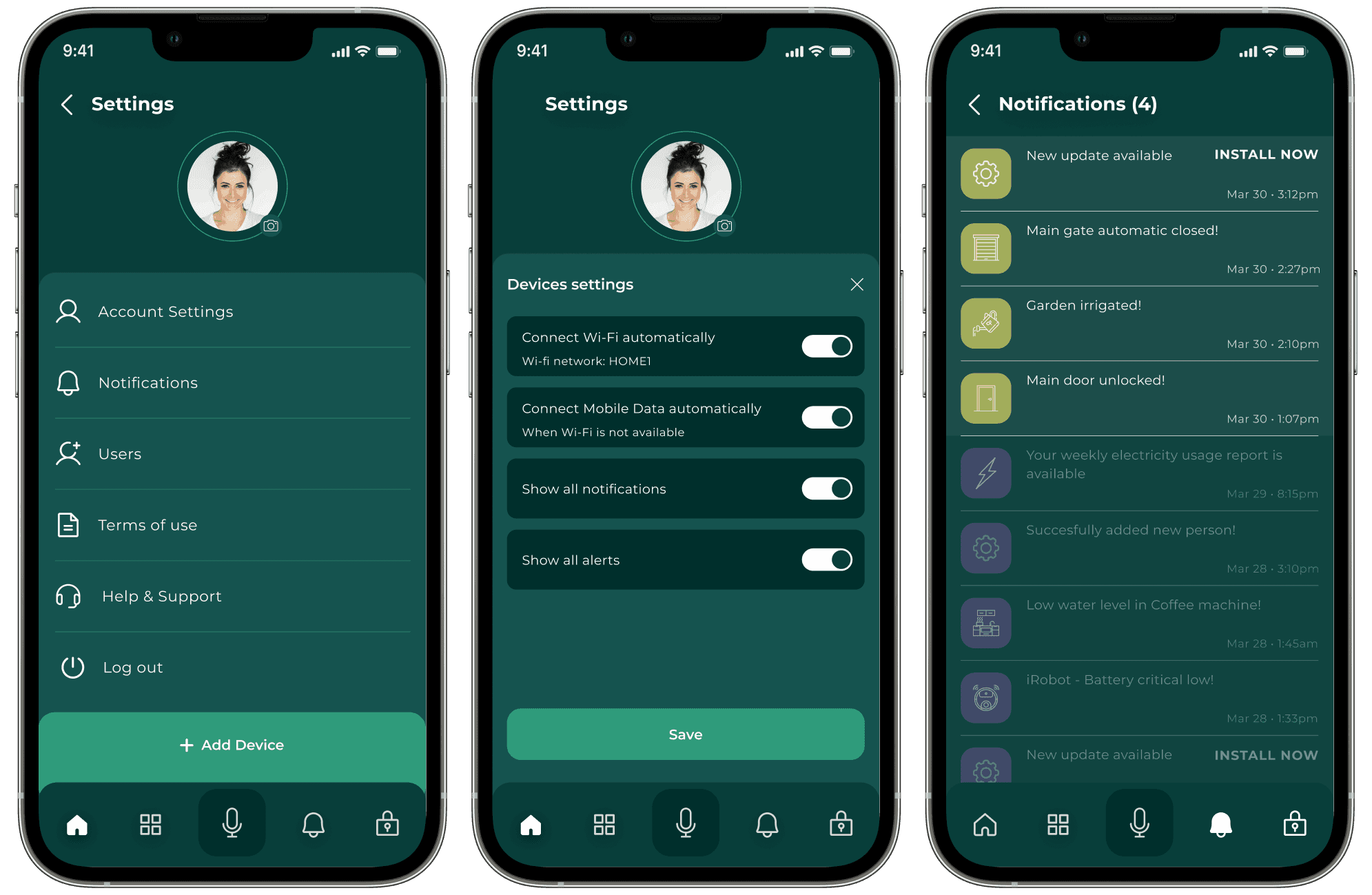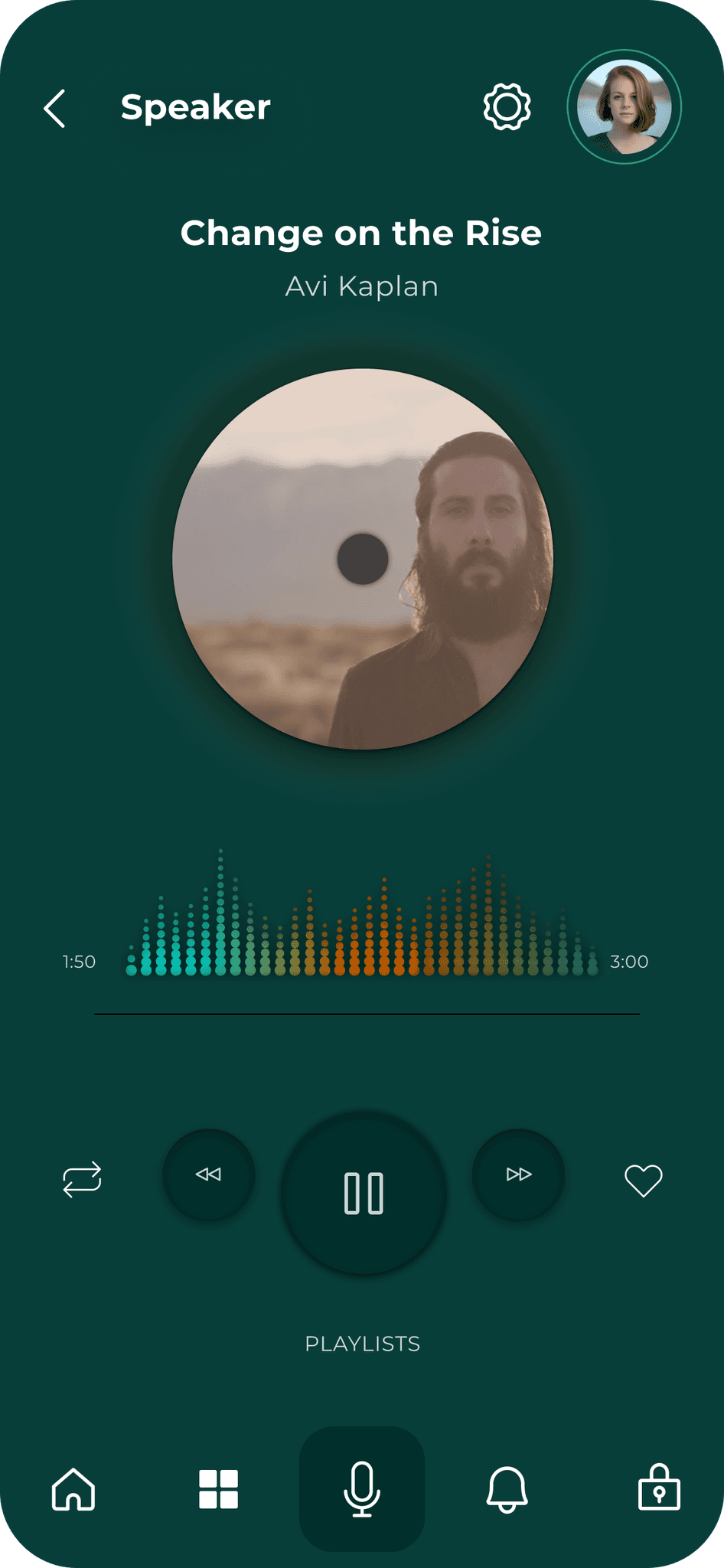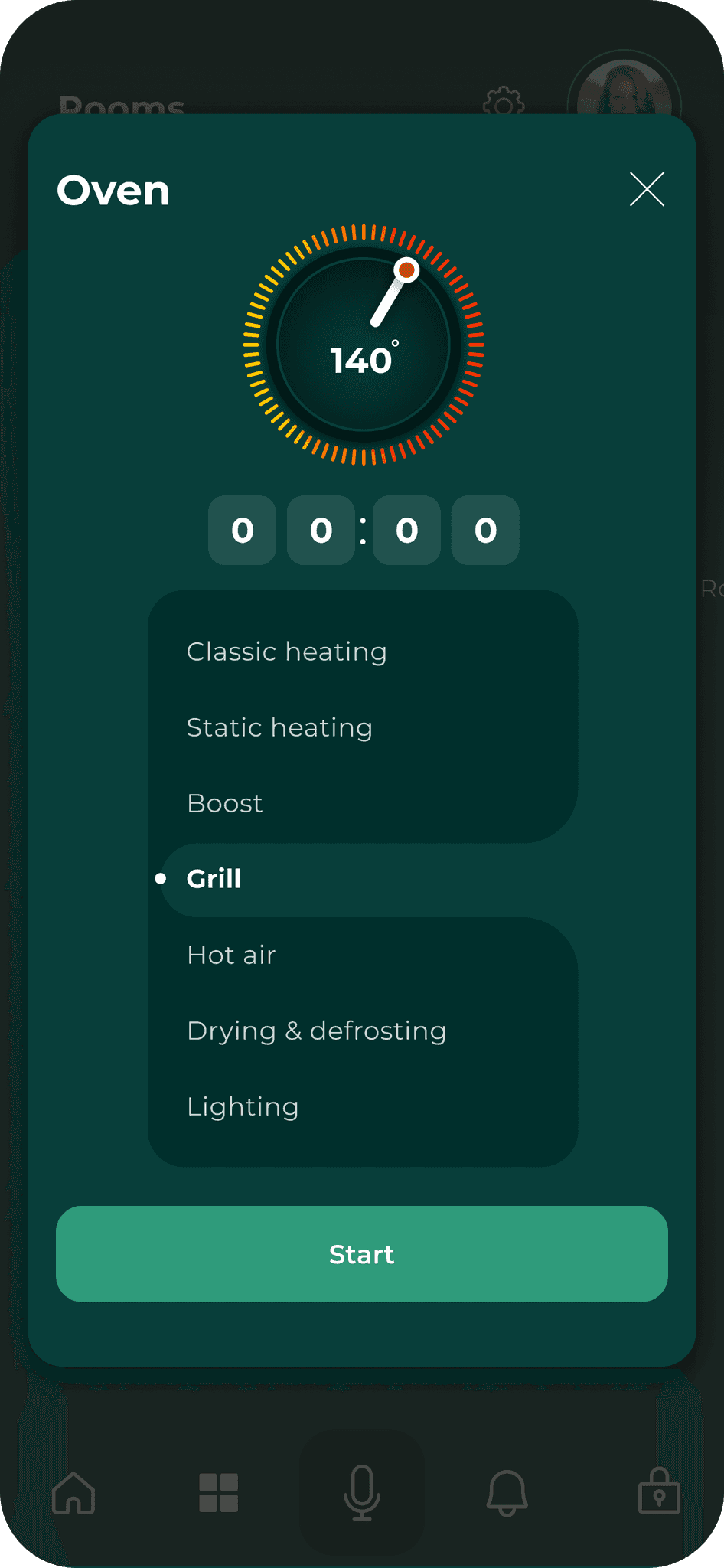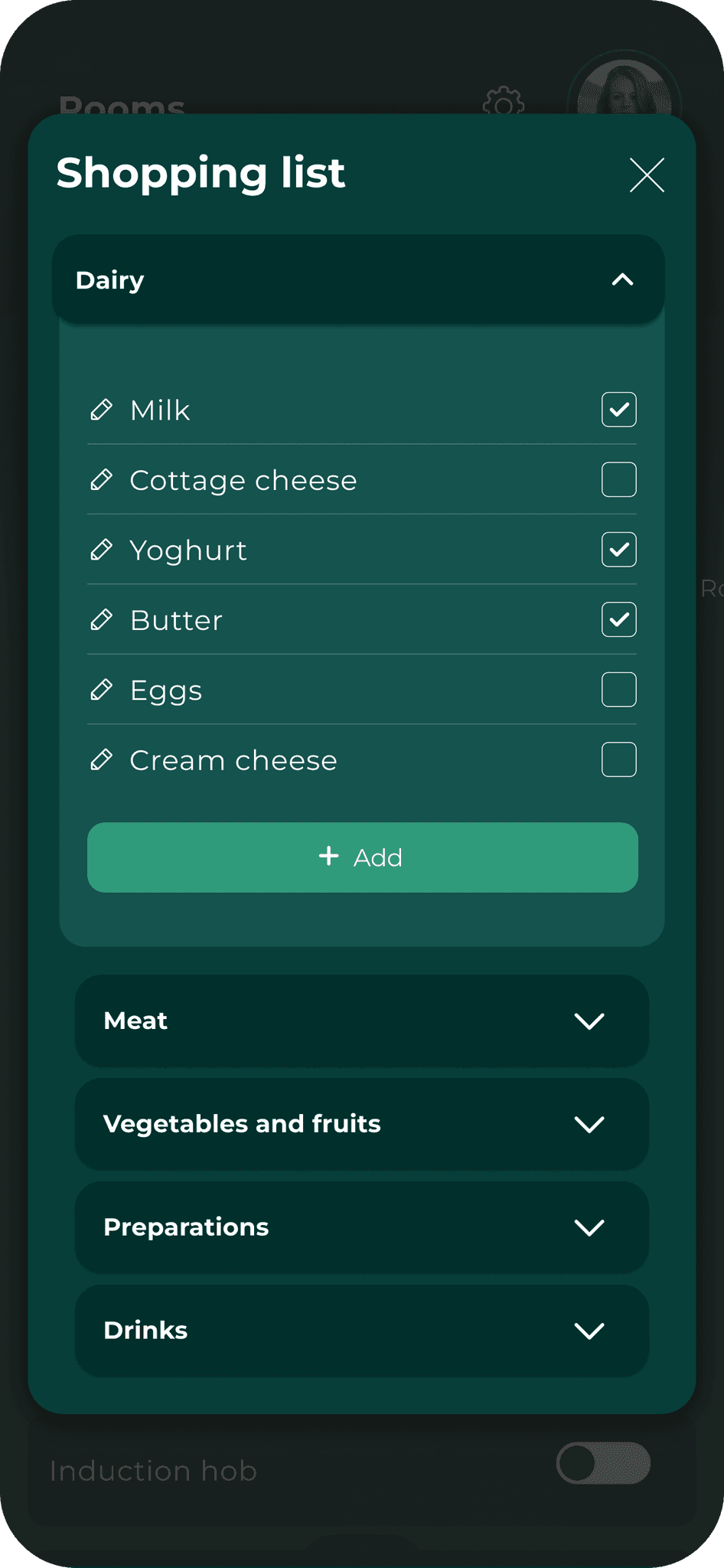
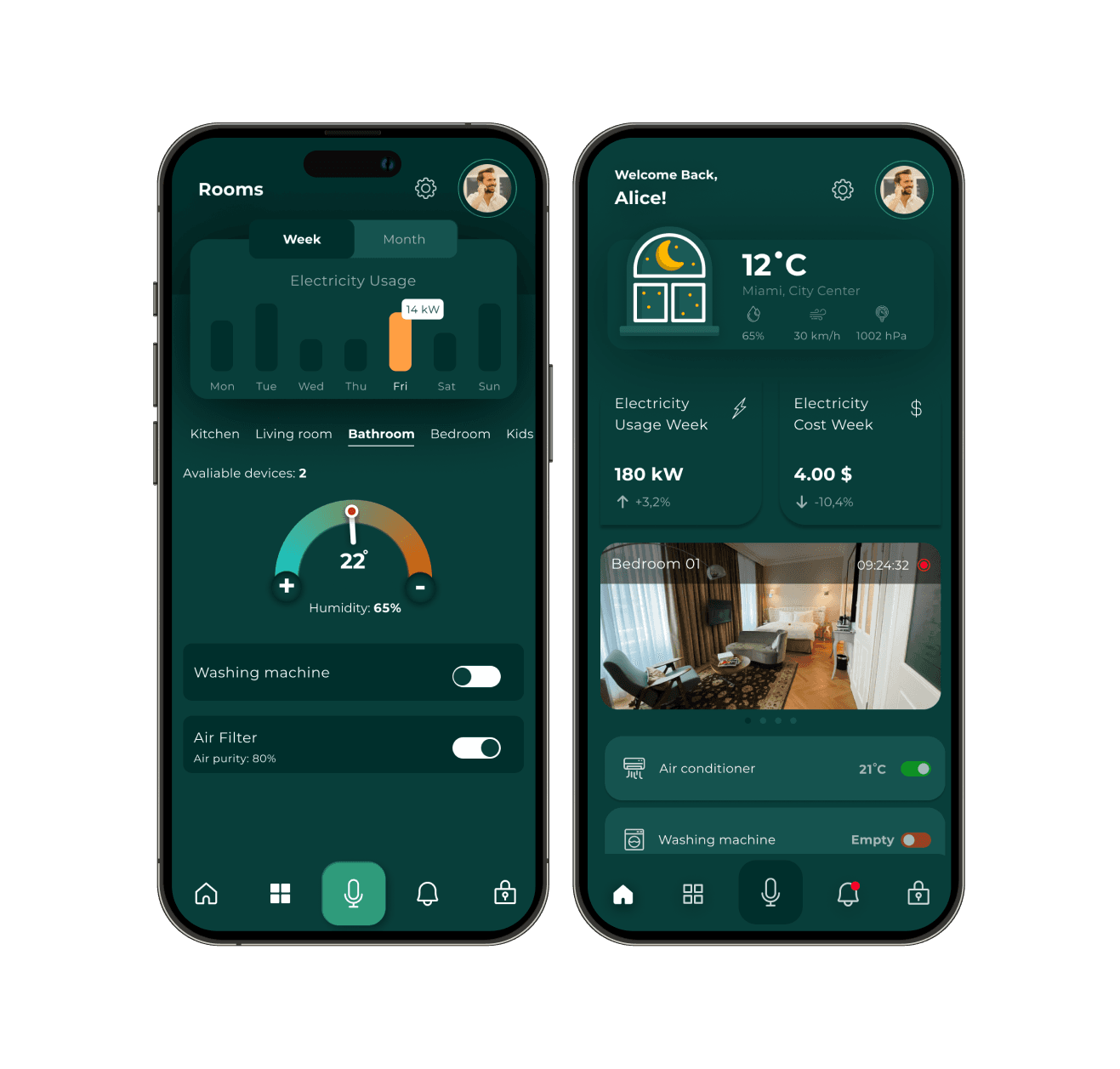
A mobile app project designed for people who have multiple devices of different brands in their home that can be controlled by a smartphone.
Project overview
Project Length: 4 months
Observations: It is estimated that Poles spend about 30 billion a year on appliances. Every day, homes are equipped with more and more technologically advanced devices. There are many apps on the market with which to manage your home, but is there a complex one that provides security, monitors the level of electricity or water consumption and allows us to manage any appliance that is capable of doing so, regardless of the brand? From my observations, I have found that there is not.
Problem
Many applications on the market that do not comprehensively meet the needs of the user, are complex, do not allow you to manage devices signed by different brands
Increasingly higher utility prices - price increases for water, electricity, gas, etc.
Unawareness of household members of how much energy exactly is consumed by equipment that is plugged in and not used at any given time
Solution
Creating logic in the application that allows you to manage technology-enabled devices to control them, no matter what company they come from
The ability to monitor through the app the exact usage of each device, along with calculations of fees at current tariffs
Ability to manage appliances remotely, alerts for excessive power or water usage, home security feature
Business goals 🎯
The launch of a solution that replaces several applications in one
• Developing a simple app with a user-friendly design that will appeal to an audience of 20-50 year olds
• Creating an application that will not be competitive, but will be based on cooperation with other brands producing consumer electronics and household appliances
• To induce the society to use available technology consciously, without abusing energy consumption.
Research
Smart Homes research (Poland)
• In 2019, every third new home in Poland had
a smart function
• Over 81% of buyers indicate they’d more opt to buy a home if smart home products where already installed
• COVID-19 strengthens the prevailing market trend where smart homes are the development of the smart workplace
Source: GlobeNewswire, Alarms.org, PAP, crn.pl


User interviews
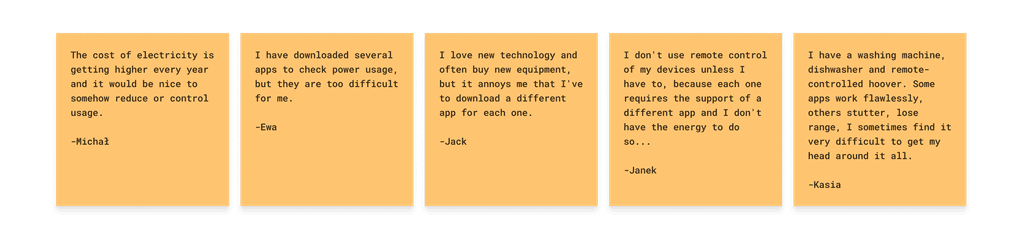
As I mentioned, I gathered a group of people for the study from my neighborhood and from groups on social media. It was a combination of 8 people between the ages of 26-32, as many as 6 of them had contact with device management at home. The survey was conducted spontaneously, in conversation, and with some people online. Here are some of the questions asked:
• Does your home have equipment that you can manage from the app?
• What equipment do you most often manage from the app?
• Do you see any difficulties in controlling devices remotely?
• What things annoy you about the current Smart Home apps, what features do you miss?
• What positives do you see in the apps to manage home devices?
• Do other residents also manage devices at home?
• Do you monitor the electricity and water consumption in your home?
• Do you have cameras in your home?
• Are you strongly affected by the recent increase in electricity prices?
User persona
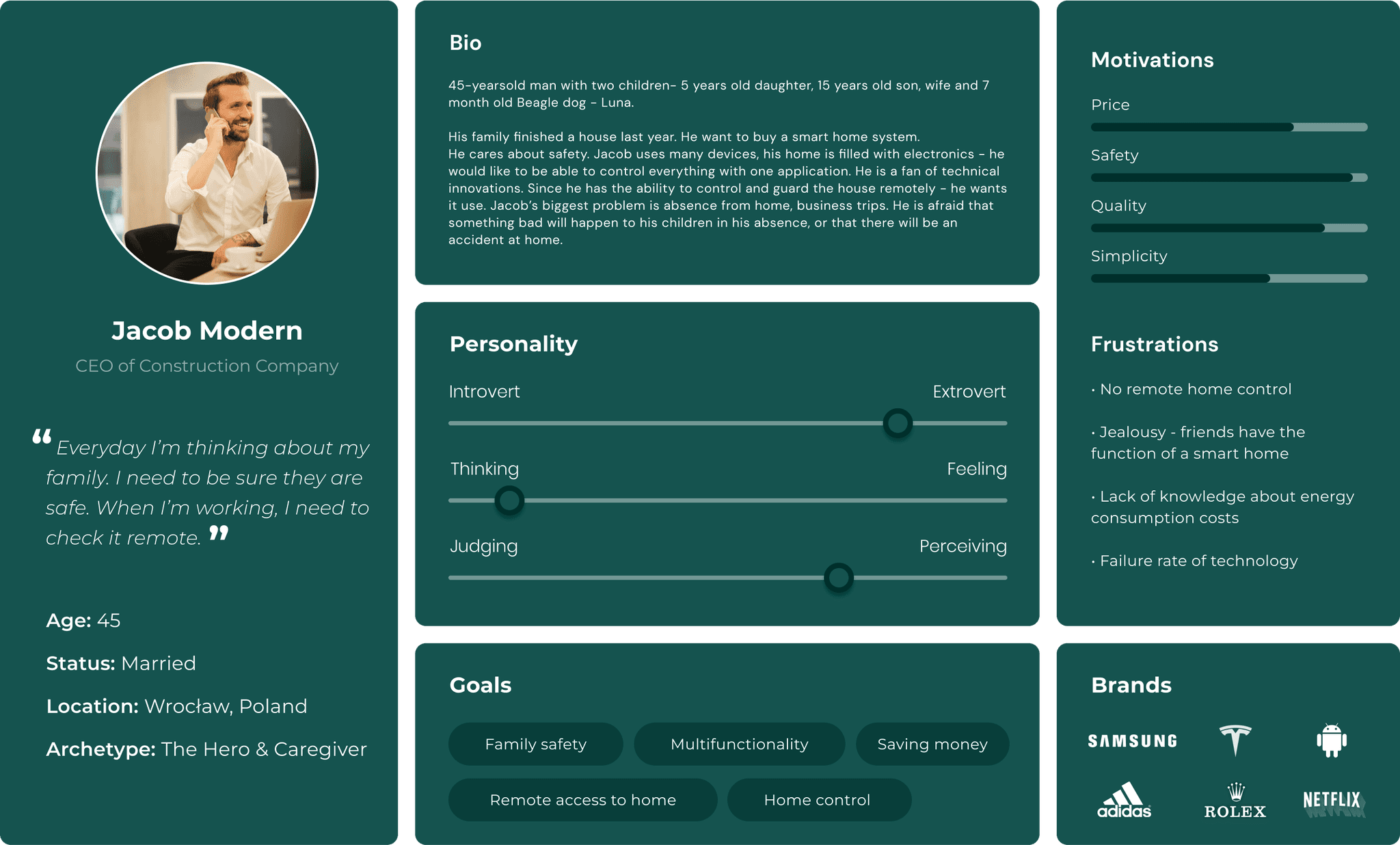
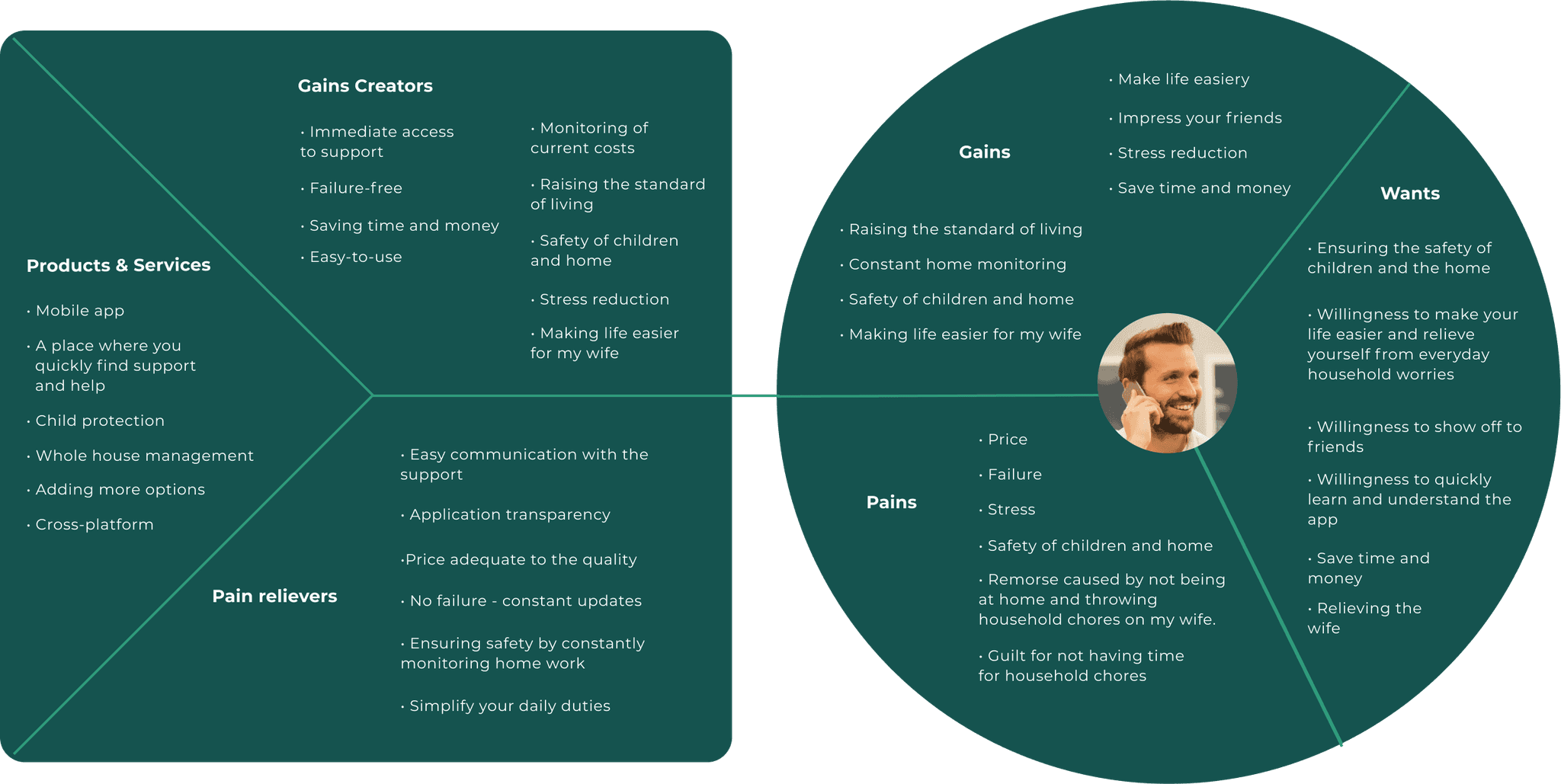
Based on the desk research & user interviews I have set up few personas and referred to them throughout the entire product development process.
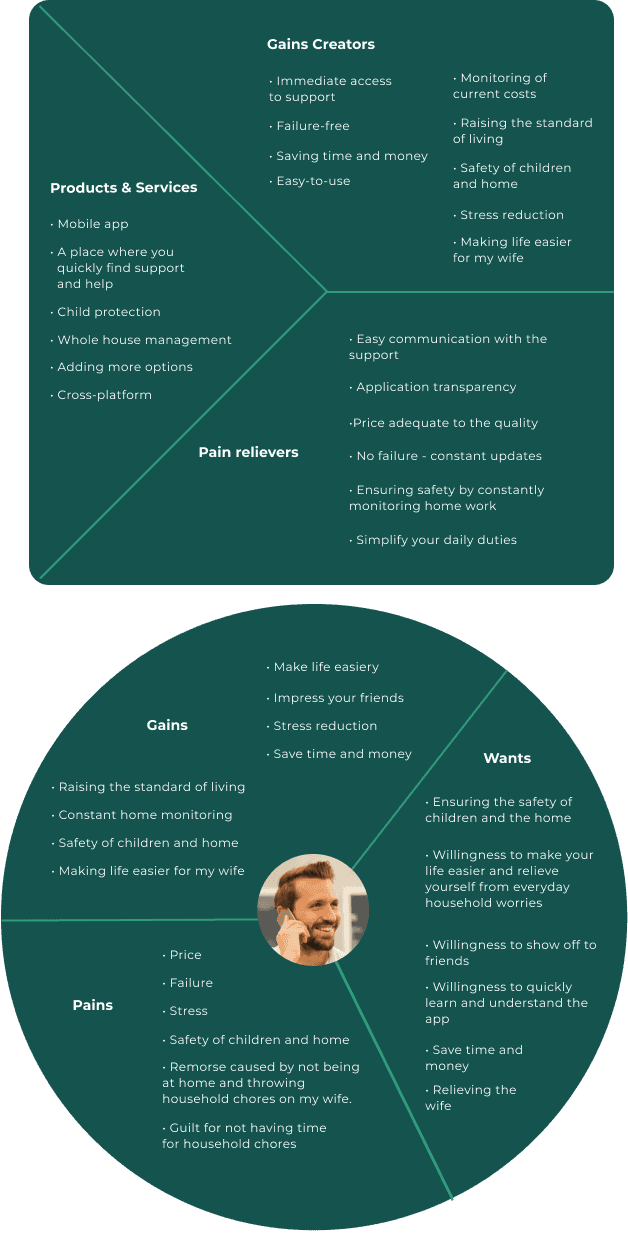
Value proposition canva
Information architecture
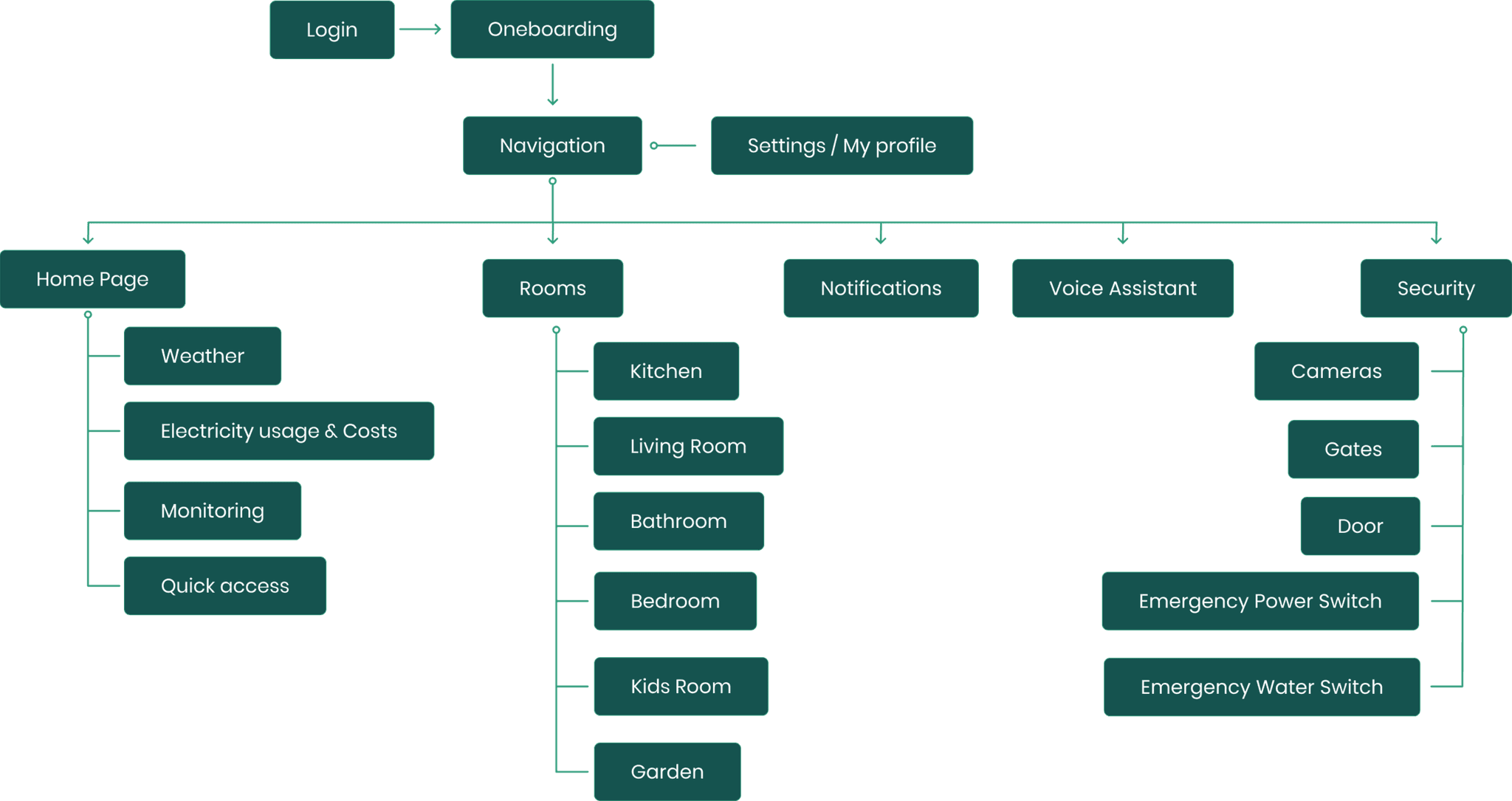
By analyzing the requirements, narrowed down the necessary features for the app functioning and created the site map.
Wireframes
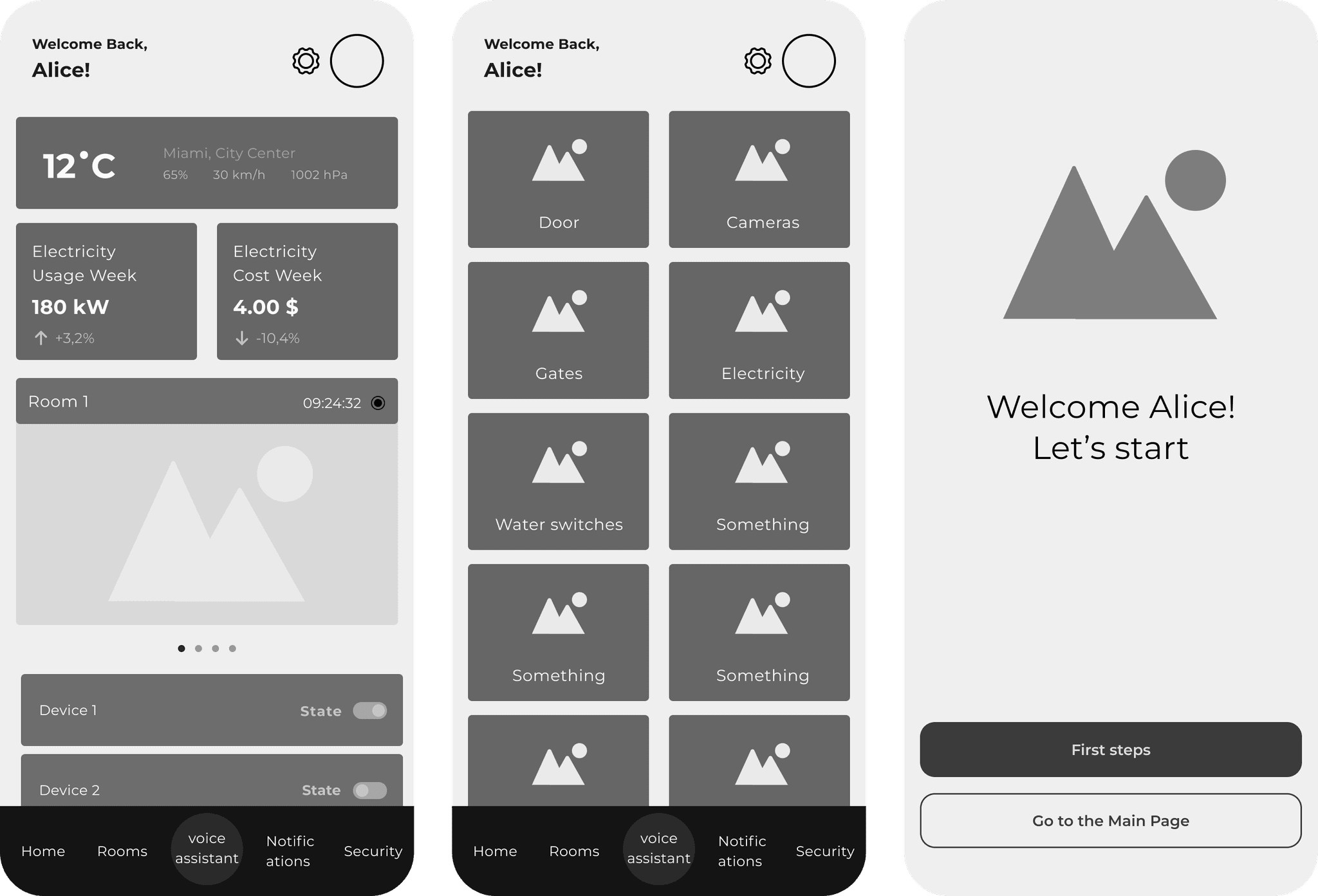
By analyzing the requirements, narrowed down the necessary features for the app functioning and created the site map.
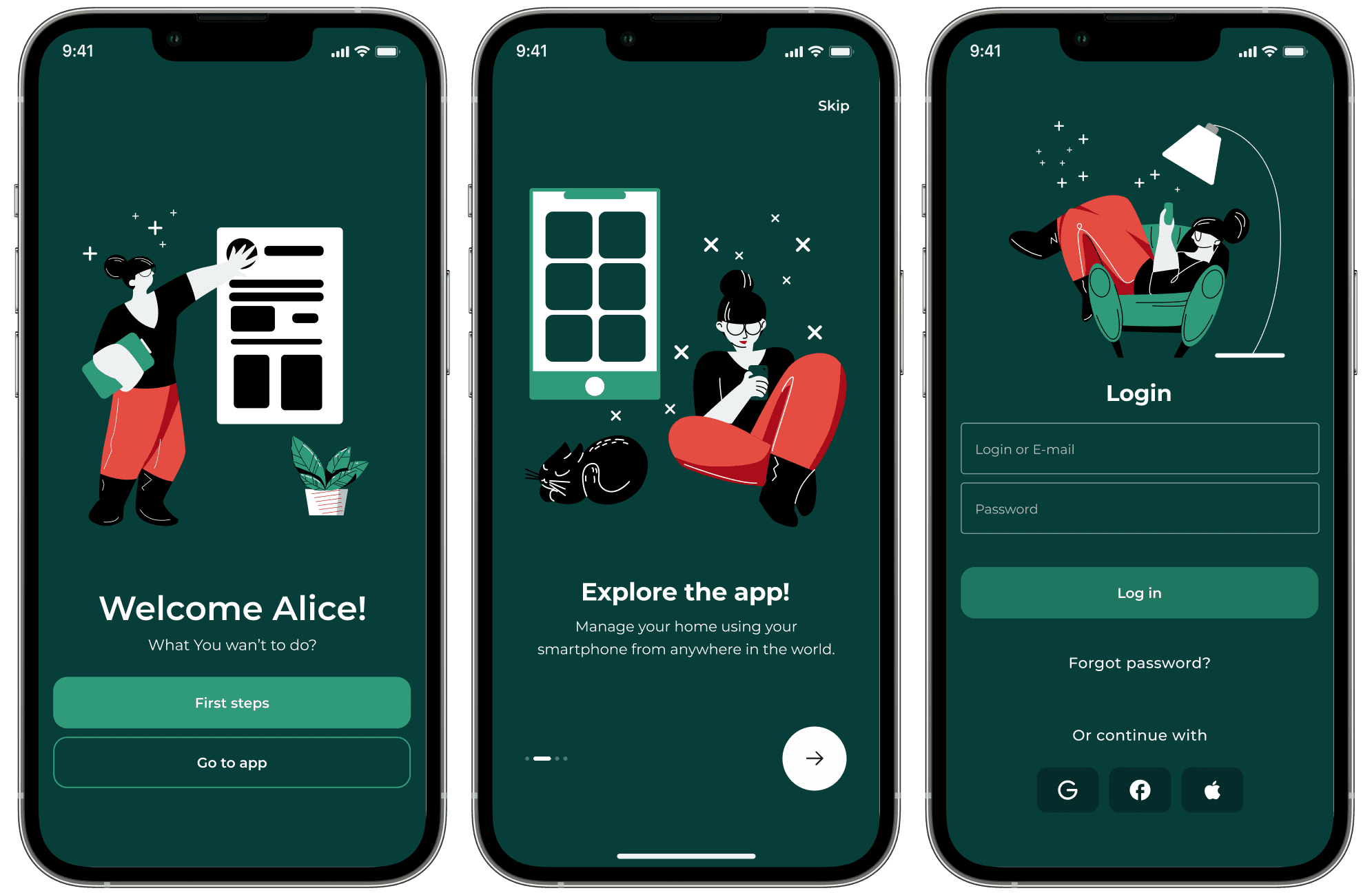
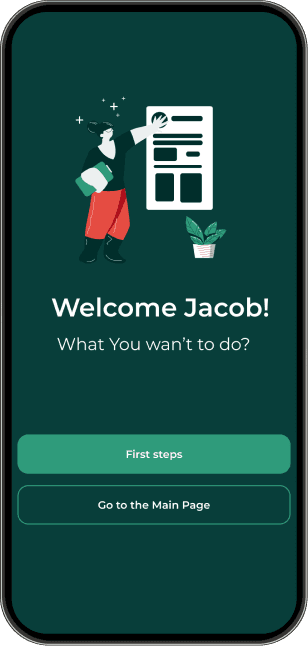
Onboarding process
Onboarding includes the user's introduction to the application, which can be skipped at any time, as well as the basic screens - login and registration.